
Products
Six product lines, one question: how does the opening move?
A gate is defined by the path it travels and the space that path needs. Start there, and the right product is usually obvious.


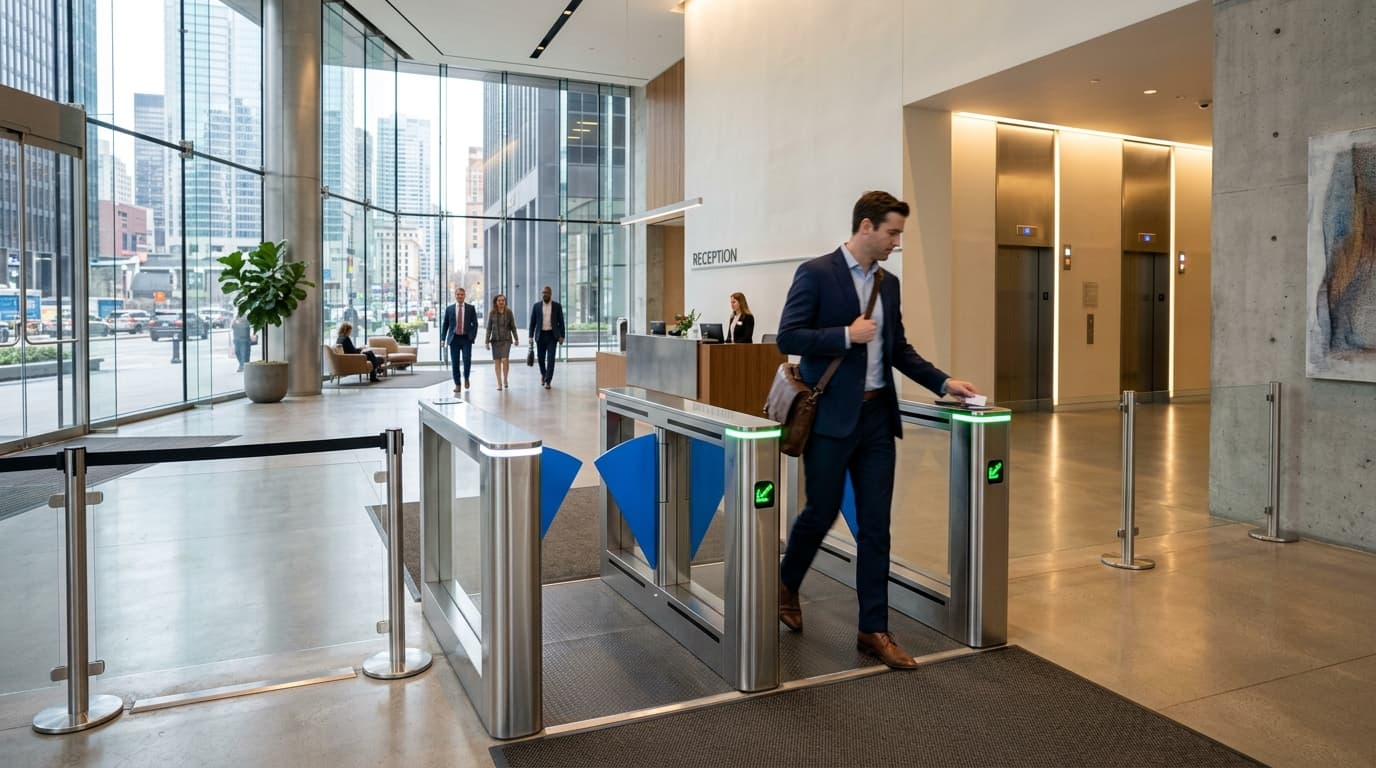
Pedestrian access control
Four formats, differing mainly in throughput, footprint and how the lane presents architecturally.
Comparing the formats
Figures are confirmed against the manufacturer datasheet before quoting — nothing here is estimated.
| Format | Throughput | Lane footprint | Bidirectional |
|---|---|---|---|
| Flap barriers | TODO(client) | TODO(client) | TODO(client) |
| Swing gate turnstiles | TODO(client) | TODO(client) | TODO(client) |
| Tripod barriers | TODO(client) | TODO(client) | TODO(client) |
| Double glass wing swing barriers | TODO(client) | TODO(client) | TODO(client) |
How you open it
Most products accept several of these. The right combination depends on who needs access and whether entries have to be logged.
Remote control
Handheld transmitters for one-touch opening and closing — the standard control method for villas, compounds and staff parking.
RFID
Contactless card or tag identification for controlled, logged entry across residential communities, offices and staff facilities.
Loop detector
In-ground induction loops that sense an approaching or waiting vehicle, used for safe automatic operation of barriers and gates.
Push button
Direct wired actuation from a wall- or post-mounted button — a reliable fallback and primary control for guarded entrances.
GSM dialer
Gate or barrier activation by phone call or SMS, useful for entrances that need remote authorisation without a fixed access list.
Wi-Fi
Network-connected operation for properties that require app-based or networked control of their entrance systems.
Bluetooth
Short-range wireless activation from a paired device, suited to pedestrian doors and controlled staff entrances.
Access control
Integration with card readers, keypads and credential systems for facilities that manage entry permissions centrally.